
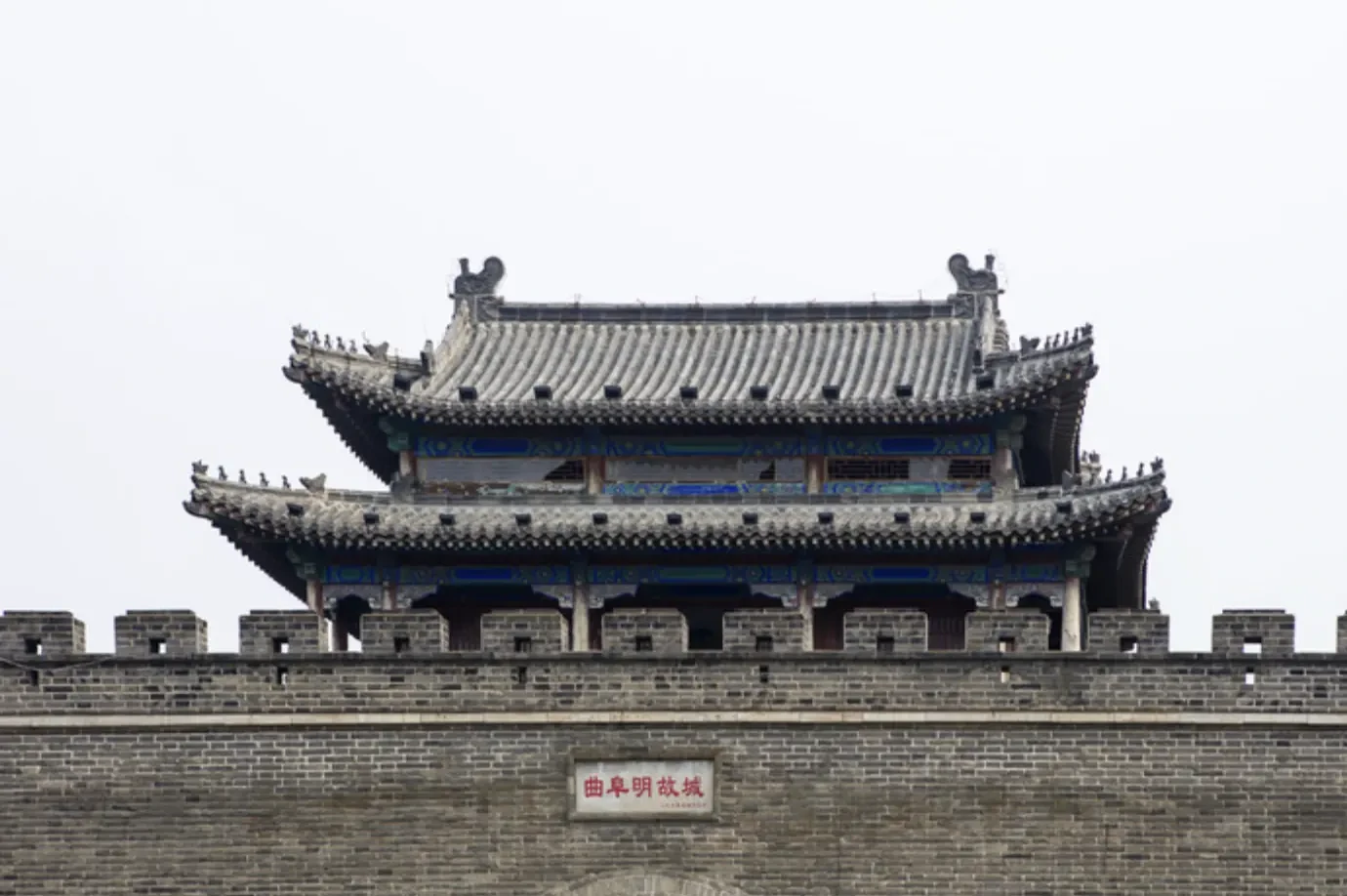
Recently, the Wanren Palace Wall section of the Ming-era city wall in Qufu's Ancient City, Jining, Shandong, officially opened to the public, becoming a new must-visit landmark. After more than 500 years, this Ming dynasty wall has moved beyond static preservation that only allowed distant viewing, now welcoming visitors to climb, explore, and experience it firsthand as part of modern life.
The ancient Ming city wall encircles core cultural tourism assets such as the Confucius Temple and the Confucius Mansion. The newly opened section stretches from Chongxin Gate in the east to Wanren Palace Wall in the west, with a total length of approximately 300 meters. Restoration and revitalization followed the principle of minimal intervention—"do no harm, preserve texture, minimize alteration"—keeping the original structure intact and retaining the historical character of the green bricks, watchtowers, and ramparts to the greatest extent possible.
Leveraging the newly launched "Inside the City Wall" IP, the scenic area has scientifically planned visitor routes to enable bidirectional circulation above and below the wall, effectively revitalizing idle spaces in the old city. "The city wall zone features a diverse mix of unique offerings. During the day, we offer educational programs, prayer rituals, Hanfu experiences, and interactive encounters with Confucian scholar NPCs, allowing visitors to immerse themselves in Confucian culture. At night, light shows and casual tea services have been rolled out, enriching Qufu's evening cultural tourism scene," said Cheng Yang, Chairman of Qufu Wenchuang City Wall Operations Management Co., Ltd.
The opening of the city wall tour section effectively connects scattered cultural and tourism nodes across the ancient city, establishing a seamless full-area visitor route. Many tourists now combine their city wall visit with tours of the Three Confucian Sites (San Kong), shifting away from the previous "see-and-go" short-stay model and significantly extending visitors' time in the area. "Previously, we could only view the city wall from afar; now, we can climb up, stroll along it, and overlook the ancient streets, immersing ourselves in Qufu's historical charm," said Chen Shuang, one of the first visitors to explore the wall.
"We adhere to the principles of prioritizing protection and implementing minimal, precise improvements to preserve the ancient city's structural integrity and historical roots, ensuring that its century-old walls remain vibrant and serve the public today," said Chu Yanli, Vice Mayor of Qufu Municipal People's Government. The revitalization and opening of the Ming-era city wall exemplifies Qufu's dedicated efforts in protecting cultural relics through active utilization and putting into practice the "two creations" policy for excellent traditional Chinese culture. It also serves as a dynamic platform for building a world-renowned cultural tourism destination.